
Gas Detection Systems for Battery R&D and Manufacturing Facilities
The proliferation of battery technologies across consumer electronics, electric vehicle systems, and utility-scale grid storage has pushed safety in battery R&D and manufacturing to the front of every facility manager’s agenda (per the U.S. Department of Energy’s Advanced Materials and Manufacturing Technologies Office). Conventional lithium-ion and sodium-ion cells carry persistent safety, durability, and reliability concerns rooted in internal short circuits that can cause batteries to swell, leak, explode, or ignite (per the U.S. Department of Energy Battery Health Sentry research).
What makes gas detection the first line of defense in these environments is its ability to intercept failure before visible smoke or heat sensors register anything unusual. Early detection is critical. Carbon monoxide and hydrogen begin venting during the early stages of electrolyte decomposition, well before thermal runaway in lithium-ion batteries reaches the point of no return. The precise lead time that off-gas detection provides ahead of full thermal runaway varies by cell chemistry and failure mode, but the qualitative advantage is consistent: ambient gas monitoring catches what electrical and thermal sensors miss at the earliest, most critical stage.
A lithium-ion or sodium-ion cell is built around electrodes (a positive cathode and a negative anode), liquid electrolyte solutions, a metal separator, and a current collector (per the U.S. Department of Energy Advanced Materials and Manufacturing Technologies Office). During an electrolyte leak or early venting phase, those liquid electrolyte solutions break down and release volatile organic compounds and toxic gases into the surrounding environment. Detecting these emissions requires sensors calibrated to the specific chemical signatures of the electrolyte formulation in use, which is why sensor accuracy demands active maintenance rather than periodic attention. Routine gas detector calibration services prevent the sensor drift that quietly degrades detection thresholds over time, often without triggering any visible fault indication on the panel.
Battery Test Times Reduced From Days to Minutes
The Battery Health Sentry project, led by Dr. Sergiy Sazhin at Idaho National Laboratory, uses self-discharge current as a rapid metric to identify developing internal shorts in minutes rather than days (per the U.S. Department of Energy Battery Health Sentry research). Ambient gas detection systems complement this diagnostic capability by providing the continuous, facility-wide safety net that active testing environments require, catching early venting events that self-discharge measurements alone cannot flag.
Bay Area facility managers operating battery testing laboratories can schedule an engineering consultation with MDC Systems to evaluate their current gas monitoring setup and identify compliance gaps. Contact our San Jose, CA team at 408-370-5005.
The Science of Battery Off-Gassing and Thermal Runaway
When an internal short circuit develops inside a lithium-ion cell, rising temperature breaks down the metal separator and begins vaporizing the liquid electrolyte. Carbon monoxide and hydrogen are among the first gases to appear at detectable concentrations during this early venting phase, making them the primary target analytes for any viable battery safety monitoring system. The chemistry here is categorically different from what a natural gas leak detector for home use is designed to handle: those devices are calibrated for methane at relatively high concentrations in open domestic spaces, not for trace-level electrochemical off-gases in a sealed test chamber or production enclosure.
Verifying that sensors respond accurately to those target gases requires high-purity reference mixtures. Accuracy is non-negotiable. Facilities sourcing calibration gas cylinders for bump testing and full-span calibration need certified concentrations traceable to national standards, which is the same exacting standard applied to any other measurement system in a regulated manufacturing environment.
Key Gas Detection Challenges in Battery Manufacturing
Battery manufacturing facilities face a set of intersecting hazard scenarios that no single sensor type resolves on its own. Hazards are complex.
- Electrolyte leak detection: VOC and solvent vapor monitoring is critical during electrolyte filling and vacuum sealing phases, where liquid electrolyte is handled in open or semi-open process equipment.
- Early detection of battery thermal runaway: High-sensitivity hydrogen and carbon monoxide sensors can identify cell venting before temperature or pressure instrumentation registers a fault, giving automated systems time to respond.
- Sequential failure mitigation: Safety in automated assembly lines depends not only on individual component failures but on the specific sequence in which those failures occur, a complexity that demands gas detection be integrated into broader process control logic (per EPA research on sequential failure modeling in automated manufacturing systems).
- Next-generation architectures add another layer of divergence. Solid-state batteries replace liquid electrolytes with solid solutions, reducing leakage and swelling risks (per the U.S. Department of Energy Advanced Materials and Manufacturing Technologies Office), while flow batteries use non-flammable redox solutions; each requiring a detection strategy matched to its actual chemical hazard profile rather than a legacy lithium-ion template.
Advanced Safety Systems for Next-Generation Battery R&D
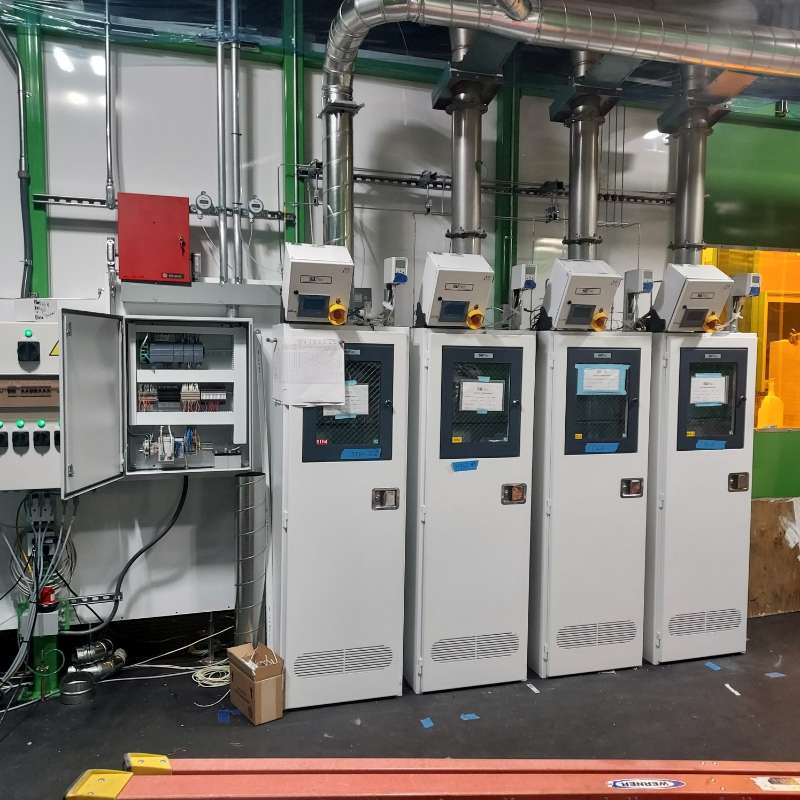
The U.S. Department of Energy and its Advanced Materials and Manufacturing Technologies Office are actively supporting the domestic manufacturing supply chain to improve the scalability, reliability, and safety of next-generation batteries (per the U.S. Department of Energy Advanced Materials and Manufacturing Technologies Office). That support includes advanced tooling for high-volume component manufacturing and modern equipment capable of operating under high temperatures and pressures, conditions that place equivalent demands on the gas detection infrastructure surrounding those processes. Hazardous gas detection systems for lithium battery environments must be designed for integration directly into environmental chambers and testing enclosures, not added to the perimeter as an afterthought. Integration is key.
The Battery Health Sentry project at Idaho National Laboratory demonstrates how rapidly diagnostic capability is advancing at the cell level (per the U.S. Department of Energy Battery Health Sentry research). Self-discharge current measurements can now flag nascent internal shorts in minutes, a capability licensed by Novus Sentry for use across defense, microgrid, and consumer product sectors. Ambient gas detection systems for EV battery plants and R&D facilities operate at a different layer: facility-wide, continuous, and independent of the battery management system, providing coverage that cell-level diagnostics cannot replace. The contrast with consumer products like a lithium iron phosphate battery charger or electric battery lawn mower makes the scale difference concrete: industrial gas detection in this context involves multi-zone monitoring, automated ventilation interlocks, and integration with fire suppression systems, none of which a single-point consumer sensor addresses.
Mitigating Sequential Failures in Automated Production Lines
In high-volume battery manufacturing, gas sensors must be integrated with automated control systems rather than treated as standalone alarm devices. Automation changes the rules. Manufacturing safety in automated environments depends not only on individual component failure states but on the specific sequence in which those failures occur (per the EPA research on sequential failure modeling in automated manufacturing systems). Researchers utilize Petri net modeling and reachability trees to map potential failure sequences and calculate their probability of occurrence across automated machining and assembly systems (per the EPA research on sequential failure modeling in automated manufacturing systems), giving process engineers a structured basis for deciding where gas detection triggers should sit in the control hierarchy.
Integrating gas detection into these predictive models allows facilities to automatically trigger ventilation, isolate battery packs, or halt production lines before a localized venting event spreads. The analogy to regulatory compliance in banking is instructive: just as multi-layered transaction monitoring prevents systemic failures by catching anomalies at each stage of a process chain, battery manufacturing requires the same sequential, layered approach to safety, where a gas detection trigger at one station interrupts a cascade before it reaches the next. This preventative architecture is what keeps safety compliance in lithium-ion production from becoming a reactive exercise.
Enhancing Safety in a Silicon Valley Battery Testing Laboratory
Battery testing laboratories in the San Jose service area present a specific combination of challenges: high cell cycle volumes, mixed chemistry test programs, and the need for continuous off-gas analysis during charge-discharge cycling. A custom gas detection system for this environment typically involves multi-point hydrogen and carbon monoxide monitoring integrated with chamber exhaust controls, with sensor placement validated against the actual venting behavior of the cell formats under test. The objective is intercepting early electrolyte decomposition signatures before any thermal event develops, a function that standard fire detection infrastructure is not designed to perform.
Facility managers in the Bay Area ready to audit their current setup can work directly with MDC Systems’ engineering team on a gas life safety system design consultation. Call our San Jose, CA office at 408-370-5005 to schedule an evaluation of your battery manufacturing facility’s gas detection and compliance posture.
Ensuring Safety Compliance in Lithium-Ion Production
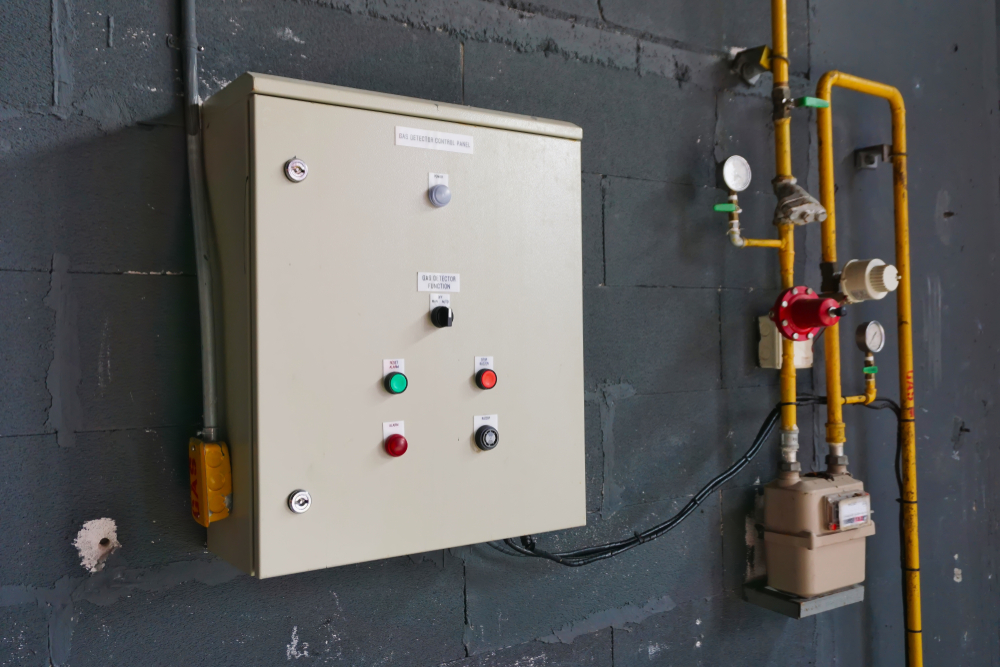
Operating a battery R&D or manufacturing facility in San Jose, CA means managing one of the more demanding hazardous materials regulatory environments in the country. Compliance is mandatory. Local municipal agencies and the relevant county authority having jurisdiction enforce stringent hazardous materials management plan requirements, and fire marshals in this region are well-acquainted with the specific risks of lithium-ion chemistry. Applicable code sections and fire safety requirements vary by occupancy classification, chemical inventory thresholds, and process type, factors that require a site-specific assessment rather than a generic compliance checklist. MDC Systems’ factory-trained technicians design LEA-approved, code-compliant gas life safety systems that satisfy local fire marshal requirements, drawing on direct experience with the regulatory expectations of Bay Area jurisdictions.
Over 30 Years of Engineering Expertise
MDC Systems is a licensed, bonded, and BBB A+ rated engineering partner with more than three decades of experience designing and maintaining gas detection systems for industrial and manufacturing facilities. For Bay Area facility managers, that track record translates to reliable system performance, low maintenance overhead, and a partner who understands the long-term cost of ownership implications of sensor selection and placement.
Frequently Asked Questions About Gas Detection in Battery Manufacturing
Off-gas monitoring detects early venting of volatile organic compounds, carbon monoxide, and hydrogen before traditional smoke detectors or heat sensors register a fire. Speed is vital. That detection window, however brief, is what allows automated mitigation systems to respond before a localized venting event develops into a facility-wide incident.
Solid-state batteries replace liquid electrolytes with solid solutions, reducing leakage and swelling risks (per the U.S. Department of Energy Advanced Materials and Manufacturing Technologies Office), while flow batteries use non-flammable redox solutions. Gas detection systems must be designed around the actual chemical hazards of these architectures rather than carried over from lithium-ion templates designed for different failure modes.
Carbon monoxide, hydrogen, and volatile organic compounds released during electrolyte venting are the primary targets. The exact relative concentrations of early-stage off-gas constituents vary by cell chemistry and failure mode and are not uniformly established across the literature, which is why sensor selection and placement should be validated against the specific chemistries in use at a given facility rather than assumed from general guidance.
By mapping failure sequences with Petri net modeling and reachability trees, manufacturers can identify which combinations and orderings of component failures create hazardous conditions (per the EPA research on sequential failure modeling in automated manufacturing systems). Gas detection systems programmed with that knowledge can interrupt dangerous sequences automatically rather than waiting for a threshold alarm to fire after the fact.
Calibration frequency depends on sensor technology, environmental exposure, and the regulatory requirements of the jurisdiction, but regular calibration is non-negotiable for maintaining detection accuracy. Facilities should use professional calibration services and certified gas mixtures to keep system accuracy and compliance documentation current; sensor drift that goes undetected is operationally indistinguishable from a sensor that was never installed.
Contact Us Today
MDC Systems serves battery R&D and manufacturing facilities across San Jose, CA and the broader Bay Area. Contact our engineering team at 408-370-5005 to schedule a customized facility evaluation and compliance audit.