
At MDC Systems, Inc., we help commercial and industrial facilities strengthen gas detection programs with reliable, accurate, and application-specific monitoring solutions. A photoionization detector is a valuable tool for identifying volatile organic compounds, commonly referred to as VOCs, and other hazardous vapors that may not be detected effectively by standard gas detection methods. When properly selected, calibrated, installed, and maintained, this technology can play an important role in protecting people, equipment, property, and operations.
We understand that every facility has unique risks. Our work begins with understanding your environment, the chemicals present, the layout of your site, the needs of your personnel, and the expectations of local authorities and safety stakeholders. From there, we help determine whether a photoionization detector is the right solution for your application and how it should be integrated into your broader gas life safety strategy.
What Is a Photoionization Detector?
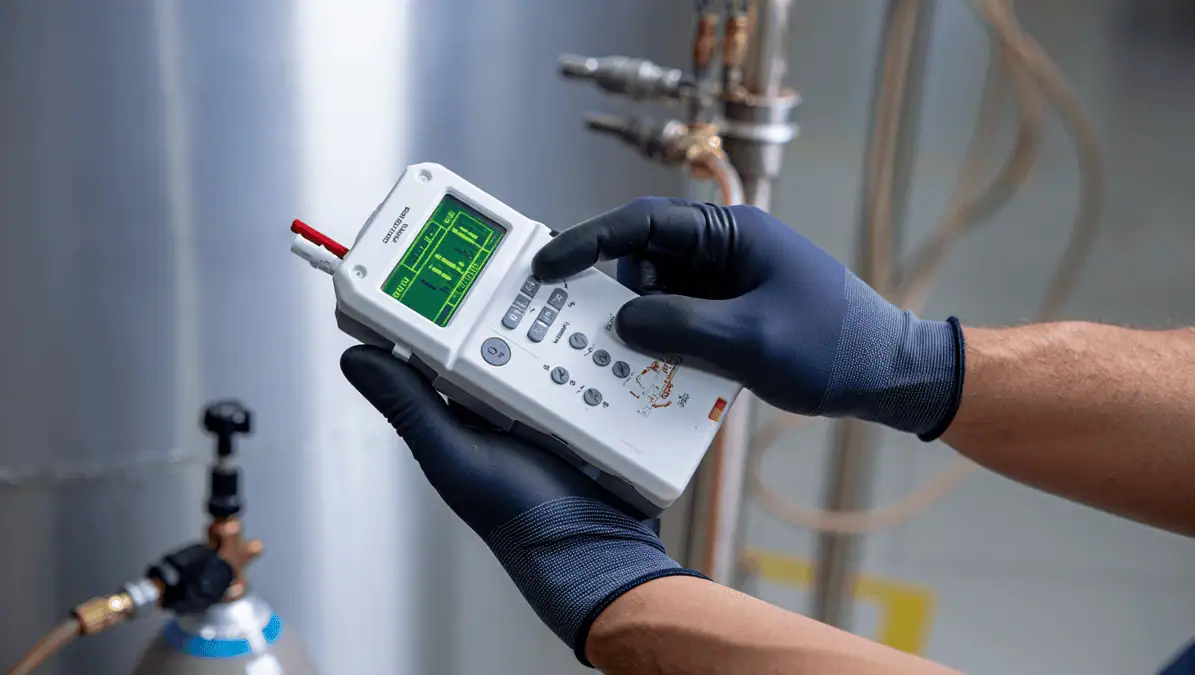
A photoionization detector is a gas detection instrument used to measure certain airborne chemical vapors. It works by using ultraviolet light to ionize molecules in the air. Once those molecules are ionized, the instrument measures the resulting electrical current and converts it into a concentration reading. This allows the device to provide real-time information about the presence of VOCs and similar compounds.
Because many hazardous vapors can be present before they are visible, smelled, or otherwise noticed, early detection is essential. We use photoionization detector technology to support safer work environments in facilities where chemical storage, processing, manufacturing, laboratory work, maintenance activities, or gas handling may create vapor-related risks.
Why Photoionization Detection Matters
Gas detection is not one-size-fits-all. Different hazards require different sensing technologies, and choosing the wrong method can leave gaps in protection. A photoionization detector is especially useful when the concern involves VOCs, solvents, fuels, cleaning agents, process chemicals, or other compounds that require sensitive vapor monitoring.
We help clients use this technology to support:
- Early identification of potentially hazardous vapors
- Improved worker awareness and response time
- Better environmental and operational monitoring
- More informed safety decisions
- Support for compliance-focused documentation
- Reduced risk of undetected chemical exposure
- Integration with broader gas life safety systems
Our goal is not simply to provide equipment. We help clients implement dependable detection strategies that match real operating conditions.
Our Approach to Photoionization Detector Services
At MDC Systems, Inc., we take a practical and systematic approach to gas detection. We evaluate your facility, your process, and your safety objectives before recommending any solution. This helps us determine where photoionization detector technology may be appropriate, what detection ranges are needed, how alarms should be configured, and how the system should be maintained over time.
Our services may include:
- Application review and hazard assessment
- Sensor and equipment selection support
- Gas life safety system integration
- Detector placement recommendations
- Startup and commissioning assistance
- Calibration and functional testing
- Maintenance planning
- Troubleshooting and performance review
- Documentation for safety and compliance records
We focus on reliability, usability, and long-term system performance. A detector is only valuable if it is properly selected, correctly installed, routinely calibrated, and understood by the people who depend on it.
Applications for Photoionization Detectors
A photoionization detector can be used in many commercial and industrial environments where VOCs or chemical vapors may be present. We work with facilities that require accurate monitoring for safety, process awareness, emergency response planning, or maintenance support.
Common applications include:
- Laboratories and research facilities
- Manufacturing environments
- Chemical storage areas
- Semiconductor and technology facilities
- Industrial maintenance areas
- Wastewater and utility operations
- Fuel storage or transfer areas
- Cleanrooms and controlled environments
- Commercial buildings with chemical use or storage
- Facilities requiring gas life safety system upgrades
No two environments are exactly alike. We review the site conditions and potential gas hazards before recommending detector type, placement, alarm levels, and supporting system components.
Integration With Gas Life Safety Systems
A photoionization detector may be used as a portable instrument, a fixed detection device, or part of a larger gas life safety system. When integrated into a complete monitoring system, it can support alarm notification, ventilation control, shutdown procedures, and communication with building management or control platforms.
We help clients think beyond individual devices. Our team considers how detection points, controllers, alarms, user interfaces, and emergency response procedures work together. This helps create a coordinated system that provides meaningful alerts and supports fast action when hazardous vapors are detected.
A well-designed system may include:
- Local audible and visual alarms
- Central controller integration
- HMI, GUI, or SCADA visibility
- Ventilation or exhaust activation
- Alarm escalation protocols
- Data logging and event history
- Preventive maintenance schedules
- Clear operating and maintenance documentation
When the full system is designed correctly, a photoionization detector becomes part of a stronger, more dependable safety program.
Calibration, Testing, and Maintenance
Accurate gas detection depends on routine calibration and testing. Sensors can drift over time, and environmental conditions can affect performance. A photoionization detector must be maintained according to the application, manufacturer guidance, and site-specific safety needs.
We provide calibration and testing support to help ensure that detection equipment continues to perform as intended. Our maintenance approach is designed to confirm accuracy, identify issues early, and provide documentation that supports safety records and regulatory expectations.
Routine service may include:
- Calibration verification
- Functional testing
- Sensor response checks
- Alarm testing
- Inspection of detector condition
- Review of system communication
- Documentation of service results
- Recommendations for repair or replacement
We believe preventive maintenance is one of the most important parts of any gas detection program. Regular service helps reduce false alarms, missed detections, downtime, and uncertainty.
Why Choose MDC Systems, Inc.?
We bring hands-on gas detection experience to every project. Our team understands the importance of choosing the right sensing technology, integrating it properly, and keeping it operational through ongoing service. We work with clients who need dependable systems, clear communication, and practical recommendations based on real facility conditions.
Clients choose us because we provide:
- Experienced gas detection support
- Customized solutions for commercial and industrial environments
- Careful attention to safety and reliability
- Support for design, installation, testing, and maintenance
- Practical recommendations based on site-specific needs
- Clear documentation and responsive service
- A long-term approach to system performance
Our role is to help you make informed decisions about gas detection technology and maintain confidence in the systems that protect your facility.
FAQ
What does a photoionization detector detect?
A photoionization detector is commonly used to detect VOCs and certain chemical vapors. The exact compounds it can detect depend on the detector, lamp energy, calibration gas, and the chemical properties of the target vapor.
Is a photoionization detector the same as a gas detector?
A photoionization detector is a type of gas detector, but it is designed for specific vapor detection applications. Other gas detectors may be better suited for combustible gases, oxygen deficiency, or specific toxic gases.
Does a photoionization detector need calibration?
Yes. Calibration is essential for maintaining accurate readings and dependable performance. We recommend routine calibration and functional testing based on the equipment, site conditions, and safety requirements.
Can a photoionization detector be part of a fixed gas monitoring system?
Yes. Depending on the application, photoionization detection can be integrated into a fixed gas life safety system with controllers, alarms, ventilation controls, and monitoring interfaces.
Where should a photoionization detector be placed?
Placement depends on the chemicals present, airflow, vapor density, process equipment, room layout, and potential release points. We evaluate these factors before recommending detector locations.
How often should a photoionization detector be serviced?
Service frequency depends on use, environment, manufacturer recommendations, and site safety requirements. Many facilities benefit from scheduled calibration, inspection, and functional testing to maintain reliable operation.
Contact MDC Systems, Inc. Today
If your facility requires VOC monitoring or chemical vapor detection, we can help you determine whether a photoionization detector is the right solution. At MDC Systems, Inc., we provide practical guidance, reliable service, and integrated gas detection support for commercial and industrial environments. Contact us today to discuss your facility, review your gas detection needs, or schedule service for your existing system.