
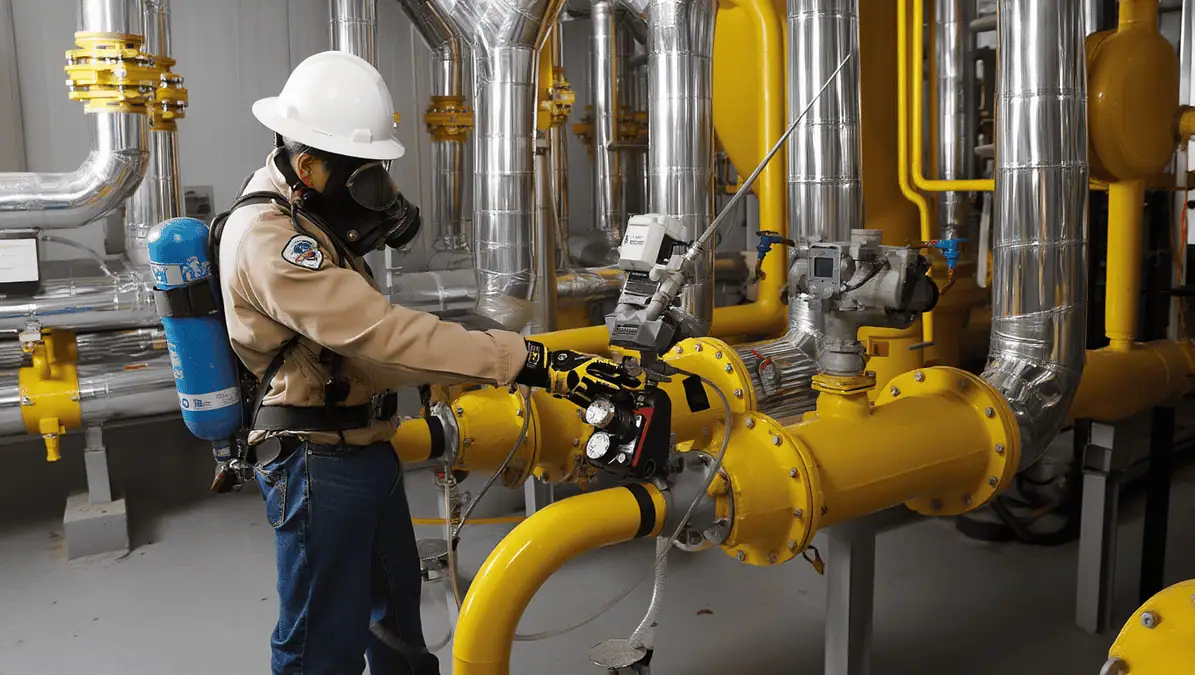
Understanding OSHA PEL requirements is essential for any facility where hazardous gases may be present. In commercial, industrial, laboratory, manufacturing, semiconductor, wastewater, energy, and specialty process environments, gas exposure can create serious risks for employees, contractors, visitors, equipment, and operations. Permissible Exposure Limits, commonly called PELs, are regulatory exposure limits established by the Occupational Safety and Health Administration to help protect workers from harmful concentrations of airborne contaminants, including many gases and vapors.
For facility owners, safety managers, engineers, and operations leaders, OSHA PEL requirements are more than a compliance checkpoint. They are a critical part of a broader gas safety strategy that includes hazard assessment, gas detection, alarm design, ventilation, emergency response planning, maintenance, calibration, documentation, and worker training. When these elements work together, businesses can reduce risk, improve uptime, support regulatory compliance, and create safer operating environments.
What Are OSHA Permissible Exposure Limits?
OSHA Permissible Exposure Limits define the maximum amount or concentration of a substance to which a worker may be exposed under specified conditions. These limits are listed in OSHA standards, including the air contaminant tables found in federal workplace safety regulations. For gases, PELs help determine when exposure may become unsafe and when controls are needed to prevent or reduce employee exposure.
PELs are commonly expressed in parts per million, often abbreviated as ppm, or in milligrams per cubic meter, often abbreviated as mg/m3. The appropriate unit depends on the substance and the way the exposure limit is listed. Some gases have limits based on an 8-hour time-weighted average, while others may have ceiling limits that should not be exceeded at any time.
The purpose of a PEL is to provide a regulatory benchmark for workplace exposure. However, a compliant exposure level does not always mean that a facility has fully optimized safety. Many employers also consider other occupational exposure limits, industry best practices, manufacturer recommendations, local requirements, and site-specific risk factors when designing gas detection and life safety systems.
Why OSHA PELs Matter for Gas Safety
Gases can pose risks in several ways. Some are toxic, some displace oxygen, some are flammable, and some can be corrosive or highly reactive. A gas may be dangerous even when it is invisible, odorless, or present at concentrations that are difficult to detect without specialized equipment. This is why properly designed gas detection and gas life safety systems are essential in many commercial and industrial settings.
OSHA PELs matter because they help employers identify exposure thresholds and determine when engineering controls, administrative controls, personal protective equipment, monitoring, or emergency procedures may be required. In practice, these limits support decisions involving:
- Gas detector placement
- Alarm setpoint strategy
- Ventilation design
- Exhaust system integration
- Shutdown or interlock logic
- Emergency notification
- Evacuation procedures
- Calibration frequency
- Documentation and compliance programs
- Employee training and response protocols
A well-designed gas safety program does not rely on a single number. Instead, it uses PELs as part of a larger safety framework that considers the gas, the process, the room layout, the ventilation rate, potential leak sources, occupancy patterns, equipment lead times, maintenance access, and the level of operational continuity required.
Common Gases That May Have Workplace Exposure Concerns
Facilities may encounter a wide range of gases depending on their industry and processes. Some gases are used directly in production, while others may be byproducts, cleaning agents, refrigerants, fuel sources, or process chemicals. Examples of gases and vapors commonly considered in workplace exposure planning include:
- Ammonia
- Carbon monoxide
- Chlorine
- Hydrogen sulfide
- Hydrogen chloride
- Nitrogen dioxide
- Sulfur dioxide
- Ozone
- Phosphine
- Arsine
- Silane
- Hydrogen
- Methane
- Propane
- Isopropyl alcohol vapor
- Solvent vapors
- Refrigerant gases
- Oxygen deficiency hazards from inert gases such as nitrogen or argon
Each gas has different characteristics. Some gases are lighter than air, while others are heavier. Some disperse quickly, while others may collect in low areas. Some create acute hazards at low concentrations, while others are primarily a concern during chronic or repeated exposure. These differences affect detector selection, sensor placement, alarm thresholds, and response planning.
Time-Weighted Averages, Ceiling Limits, and Short-Term Exposures
One of the most important parts of understanding OSHA PELs is knowing how exposure limits are measured. Not every exposure limit functions the same way.
An 8-hour time-weighted average is designed to limit average exposure over a standard work shift. This is useful for evaluating exposure that may vary throughout the day. A worker may experience brief increases in concentration, but the average exposure over the shift must remain within the applicable limit.
A ceiling limit is different. A ceiling limit is a concentration that should not be exceeded at any point during the work period. Ceiling limits are especially important for substances that can cause immediate or acute health effects.
Some workplace safety evaluations also consider short-term exposure limits from other authoritative sources, especially when a gas can create immediate hazards during brief releases. Even when OSHA’s mandatory PEL is the regulatory baseline, many employers use more conservative guidelines to improve protection, reduce liability, and strengthen emergency planning.
OSHA PELs and Gas Detection Systems
Gas detection systems are often a critical tool for helping facilities manage exposure risks. These systems can continuously monitor areas where gases may be stored, used, generated, or released. When a gas concentration reaches a defined level, the system can trigger alarms, notifications, ventilation changes, equipment shutdowns, or other control responses.
A gas detection system may include:
- Fixed gas detectors
- Gas detection controllers
- Audible and visual alarms
- Exhaust fan controls
- Building management system integration
- SCADA integration
- Human-machine interface displays
- Remote notification capabilities
- Emergency power considerations
- Calibration ports and maintenance access
- Data logging and reporting features
PELs can influence alarm philosophy, but alarm setpoints should be developed carefully. In many facilities, alarm thresholds may need to be lower than the PEL to provide early warning before exposure becomes dangerous or noncompliant. The correct approach depends on the gas, the hazard type, applicable codes, local enforcement expectations, process requirements, ventilation, and owner safety goals.
Designing Around Real-World Gas Hazards
A gas life safety system should be designed around the real operating conditions of the facility. A generic or one-size-fits-all system can leave gaps in coverage, create nuisance alarms, or increase long-term operating costs. Good design begins with understanding the application.
Important design questions include:
- What gases are present on-site?
- Where are gases stored, delivered, used, or exhausted?
- What are the likely leak sources?
- Are gases toxic, flammable, corrosive, oxygen-displacing, or pyrophoric?
- How does each gas behave in air?
- What areas are occupied?
- What ventilation systems are available?
- What codes, standards, and local enforcement requirements apply?
- What alarm actions are required?
- What equipment needs to shut down during an event?
- How will the system be tested, calibrated, and maintained?
- What documentation will be required for owners, inspectors, or authorities?
These questions help define the right system architecture. They also help determine how to integrate gas detection into the larger facility safety strategy.
The Role of Local Requirements and Authorities Having Jurisdiction
While OSHA provides federal workplace safety requirements, gas safety system design is often shaped by additional authorities and regulations. Depending on the facility, the project may involve local fire departments, building officials, environmental health and safety teams, insurers, owner standards, and authorities having jurisdiction. California facilities may also need to consider state requirements and local enforcement practices.
For this reason, it is important to work with a provider that understands both technical design and approval pathways. A system that looks good on paper must also satisfy the operational, regulatory, and inspection needs of the project. Early coordination can reduce delays, prevent redesign, and support smoother commissioning.
Best Practices for Managing Gas Exposure Risks
Facilities that handle hazardous gases should take a proactive approach to exposure management. OSHA PELs are important, but they work best when paired with practical controls and ongoing system management.
Recommended best practices include:
- Complete a gas hazard assessment before design or system modification
- Review the applicable PELs and other exposure guidance for each gas
- Select sensors that are appropriate for the specific gases and environment
- Place detectors based on gas behavior, leak sources, airflow, and occupancy
- Use alarm setpoints that provide meaningful warning and response time
- Integrate alarms with ventilation, notification, and shutdown systems where needed
- Develop written emergency response procedures
- Train employees on alarm meanings and response steps
- Maintain calibration records and service documentation
- Review system performance after process changes or facility expansions
- Schedule routine inspection and preventive maintenance
- Coordinate with qualified professionals for system testing and upgrades
A gas detection system is not a set-it-and-forget-it asset. Sensors age, processes change, gases may be added or removed, and codes can evolve. Regular review helps maintain reliable performance and supports long-term safety.
Why System Reliability and Cost of Ownership Matter
Gas safety systems are mission-critical. When they fail, the consequences can include unsafe exposure, false alarms, production disruption, emergency response events, regulatory concern, and costly downtime. Reliability should therefore be a primary design driver.
Cost of ownership is also important. The lowest initial price may not provide the best long-term value if the system is difficult to maintain, prone to nuisance alarms, hard to calibrate, or built with components that have long replacement lead times. A smart design balances safety, reliability, maintainability, code compliance, equipment availability, and future scalability.
Key cost-of-ownership considerations include:
- Sensor lifespan
- Calibration requirements
- Spare parts availability
- Equipment lead times
- Serviceability
- System expandability
- Integration complexity
- Training needs
- Documentation quality
- Downtime risk during maintenance or repair
A well-planned GLSS can reduce avoidable costs while improving safety performance.
OSHA PELs Are Only One Part of a Complete GLSS Strategy
OSHA PELs provide an important regulatory foundation, but they should not be treated as the only design input for a gas life safety system. Gas detection design must account for the total risk profile of the facility. This includes acute hazards, process-specific risks, ventilation performance, emergency response time, local requirements, and owner expectations.
For example, a facility may need alarm thresholds that activate well before a concentration reaches a regulatory exposure limit. Early warning can help personnel investigate, ventilate, isolate equipment, or evacuate before conditions become dangerous. In other cases, a gas may create a flammability or oxygen displacement hazard that requires a different detection and alarm strategy than a toxic exposure concern.
This is why customized GLSS design is so valuable. The right system should be engineered for the facility, the gases, the application, the users, and the required response.
FAQ
What does OSHA PEL mean?
OSHA PEL stands for Occupational Safety and Health Administration Permissible Exposure Limit. It is the legal limit for worker exposure to certain airborne substances under specified conditions.
Are OSHA PELs the same for every gas?
No. Different gases have different exposure limits based on their health effects, chemical properties, and regulatory listings.
Are PELs always based on an 8-hour workday?
Many PELs are 8-hour time-weighted averages, but some substances may have ceiling limits or other exposure requirements. It is important to review the specific limit for each gas.
Do gas detectors automatically ensure OSHA compliance?
No. Gas detectors are important safety tools, but compliance also depends on proper system design, alarm strategy, maintenance, calibration, training, documentation, and exposure control procedures.
Should alarm setpoints be the same as OSHA PELs?
Not always. Alarm setpoints are often designed to provide early warning before exposure reaches a hazardous or noncompliant level. The correct setpoints depend on the gas, facility, code requirements, and safety objectives.
How often should gas detection systems be calibrated?
Calibration frequency depends on the gas, sensor type, manufacturer guidance, site conditions, regulatory expectations, and facility safety policy. Many facilities establish routine calibration schedules and maintain documentation for compliance and reliability.
What industries need gas life safety systems?
Industries that may require GLSS include semiconductor manufacturing, laboratories, chemical processing, wastewater treatment, healthcare, food processing, energy, battery manufacturing, refrigeration, research facilities, and other commercial or industrial operations using hazardous gases.
Why is a customized GLSS important?
A customized GLSS accounts for the specific gases, processes, room layouts, ventilation, operating conditions, and response requirements of the facility. This improves safety, reliability, maintainability, and long-term value.
Partner With MDC Systems, Inc. for Reliable Gas Life Safety Solutions
When gas safety matters, experience and precision matter. MDC Systems, Inc. specializes in customized gas life safety systems designed to meet the unique needs of commercial and industrial businesses. With more than 30 years of GLSS experience, we bring proven expertise in design, system selection, I/O functionality, SCADA, HMI development, engineering, testing, installation, calibration, maintenance support, and ongoing system management.
Based in San Jose, California, we have served the greater Bay Area since 2010 and now support clients throughout California and across the United States. We are fully licensed, bonded, and BBB-accredited with an A+ rating. We are committed to delivering LEA and owner-approved solutions that prioritize safety, reliability, cost of ownership, equipment lead times, performance, and peace of mind.
Whether your facility needs a new gas detection system, an upgrade to an existing GLSS, professional testing, system integration, or long-term maintenance support, we have you covered. Contact us today for a free estimate and discover how a trusted GLSS partner can help protect your people, your facility, and your operations.