
Description
0.5 ppm Phosphine (PH₃) Calibration Gas for Ultra-Low Detection Applications
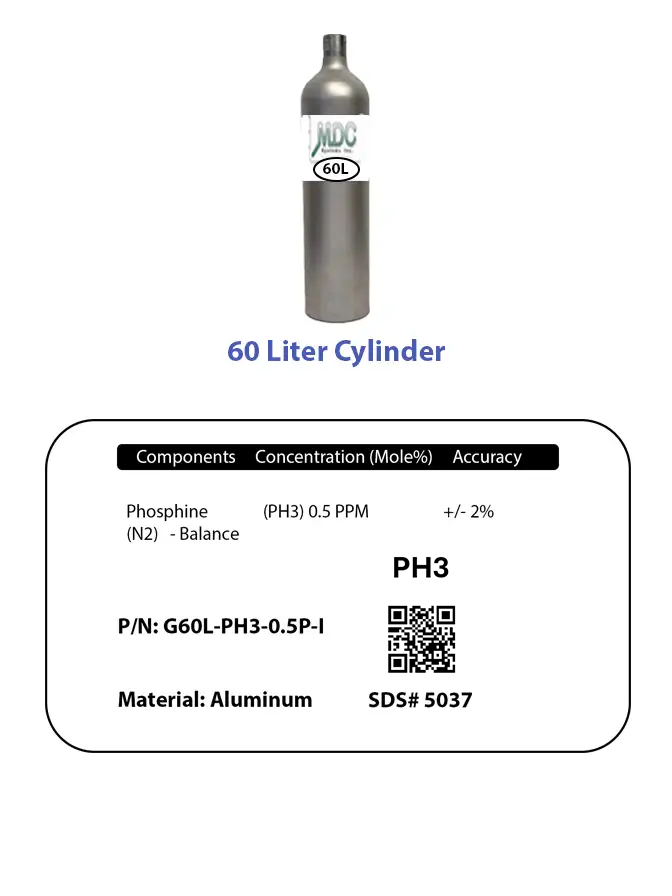
This 0.5 ppm Phosphine (PH₃) calibration gas is designed for ultra-low concentration calibration of gas detection systems used in highly sensitive and safety-critical environments. Supplied in a 60-liter cylinder, this mixture ensures precise and reliable sensor performance for detecting trace levels of phosphine.
Phosphine is an extremely toxic and flammable gas commonly used in fumigation, semiconductor manufacturing, and chemical processing. Due to its high toxicity even at extremely low concentrations, accurate detection is essential. This calibration gas supports systems used in gas life safety systems and hazardous gas monitoring programs.
At 0.5 ppm, this gas is ideal for calibrating sensors designed for early detection and low exposure thresholds, ensuring rapid response to even minimal phosphine presence.
Calibration Profile: 0.5 ppm Phosphine (PH₃)
This ultra-low concentration phosphine blend is used for high-sensitivity detector calibration where early warning is critical.
0.5 ppm
Best Fit Applications
- Fumigation monitoring systems
- Semiconductor gas detection
- Ultra-low toxic gas detection programs
Specifications
- Gas: Phosphine (PH₃)
- Concentration: 0.5 ppm
- Balance Gas: Nitrogen (N₂)
- Cylinder Size: 60 Liter
- Material: Aluminum
- Accuracy: ±2%
- Part Number: G60L-PH3-0.5P-I
- Lead Time: 4 business days
Compatibility & Ordering Notes
- Use regulators and materials specifically rated for highly toxic gases like phosphine.
- Verify your detector’s sensitivity range supports ultra-low calibration points such as 0.5 ppm.
- Custom phosphine mixtures, cylinder sizes, and regulator configurations are available upon request.
Applications
- Calibration of phosphine gas detectors
- Fumigation safety monitoring
- Semiconductor manufacturing environments
- Chemical processing facilities
- Used with gas detector calibration services
Selecting an Ultra-Low PH₃ Calibration Gas
A 0.5 ppm phosphine calibration gas is typically used in environments where even trace exposure presents serious risk. When selecting your calibration gas, ensure it aligns with your detector’s sensitivity, alarm thresholds, and the criticality of early detection in your application.
Why Phosphine Calibration is Critical
Phosphine is extremely hazardous at very low concentrations and can pose immediate health risks. Calibration ensures detection systems provide accurate and timely warnings, helping prevent exposure and ensuring compliance with safety standards.
Understanding PH₃ Detection
Phosphine sensors are designed for high sensitivity due to the gas’s toxicity. Calibration at low ppm levels helps verify sensor accuracy, prevent drift, and ensure proper alarm functionality in critical environments.
Frequently Asked Questions
- What is phosphine used for?
Phosphine is commonly used in fumigation processes, semiconductor manufacturing, and chemical production. - Why is phosphine dangerous?
It is highly toxic and can cause severe health effects even at very low concentrations. - What does 0.5 ppm PH₃ represent?
It is a low-level calibration point used to verify sensor sensitivity and early detection capability. - Where is phosphine monitoring required?
In fumigation environments, industrial facilities, and any area where phosphine is stored or used. - How often should PH₃ sensors be calibrated?
Typically every 3–6 months or based on safety requirements and operating conditions.
Additional Options
- Custom gas mixtures not listed: Available upon request
- Alternative regulators and flow configurations: Available upon request
- Different cylinder sizes within calibration kits: Available upon request
Need Help with Toxic Gas Detection Systems?
MDC Systems provides calibration gas supply, system service, and maintenance support to ensure reliable phosphine detection and safe operation in critical environments.